Neighbourhood CARE
Replacing outdated Word files and scattered Canva emails with a professional, data-driven identity.
(Year)
2025
(Services)
Editorial Design · Information Design · Marketing Emails
(Tools Used)
Adobe InDesign · Adobe Illustrator · Adobe Photoshop · HubSpot
The
Challenge
En
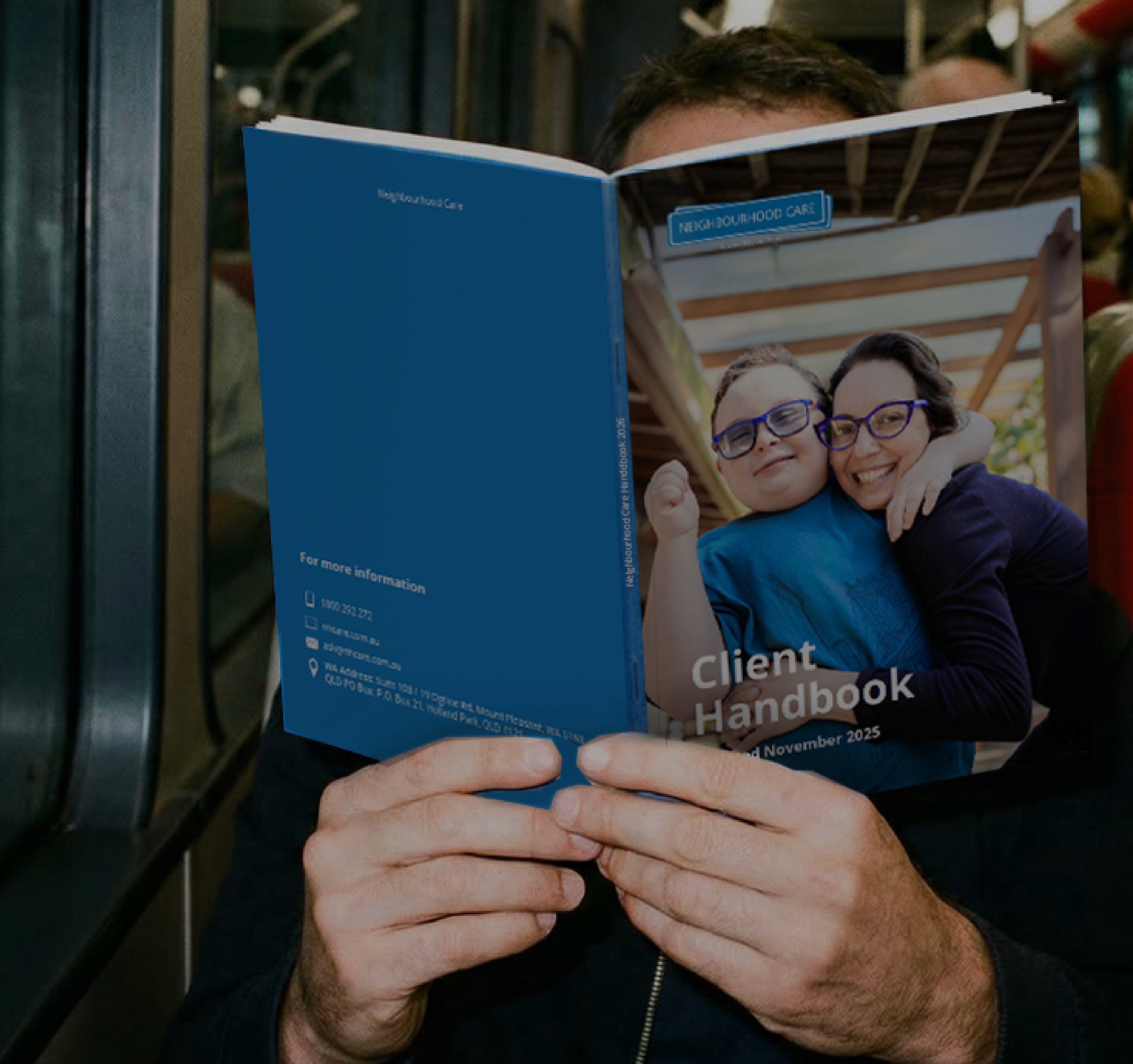
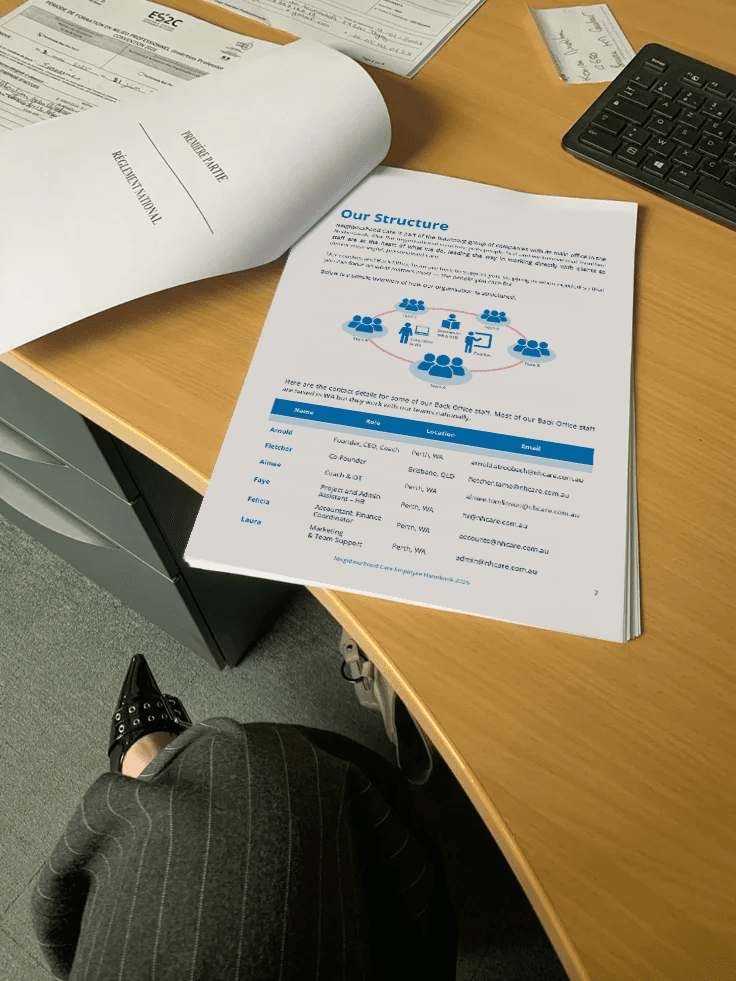
NH Care needed two handbooks, one for clients, one for employees. Both existed already, in the way most internal documents exist: dense Word files, wall-to-wall text, no visual hierarchy, no personality, and no real consideration for the person on the other side. The client handbook would be handed to older adults and their families at a moment when they were likely overwhelmed, navigating care decisions, unfamiliar systems, and a lot of information they needed to retain. The employee handbook would land in the hands of new staff on their first day. In both cases, the document had one job: make people feel informed, not buried. The additional constraint was imagery. The staff didn't want to be photographed. Which meant design had to do what photography couldn't.
Es
NH Care necesitaba dos handbooks, uno para clientes, uno para empleados. Ambos ya existían, de la manera en que la mayoría de los documentos internos existen: archivos de Word densos, texto de pared a pared, sin jerarquía visual, sin personalidad, y sin consideración real por la persona al otro lado. El handbook de clientes sería entregado a adultos mayores y sus familias en un momento en que probablemente estaban abrumados, navegando decisiones de cuidado, sistemas desconocidos, y mucha información que necesitaban retener. El handbook de empleados llegaría a manos del nuevo personal en su primer día. En ambos casos, el documento tenía un solo trabajo: hacer que las personas se sintieran informadas, no enterradas. La restricción adicional era el imagery. El staff no quería ser fotografiado. Lo que significaba que el diseño tenía que hacer lo que la fotografía no podía.
My
roLE
En
Visual design for both handbooks, layout, typography, colour system, information hierarchy, and print production. Content structure was defined collaboratively with the marketing team. The visual execution was entirely mine.
Es
Diseño visual para ambos handbooks, layout, tipografía, sistema de color, jerarquía de información y producción impresa. La estructura de contenido fue definida colaborativamente con el equipo de marketing. La ejecución visual fue completamente mía.
The
Process
En
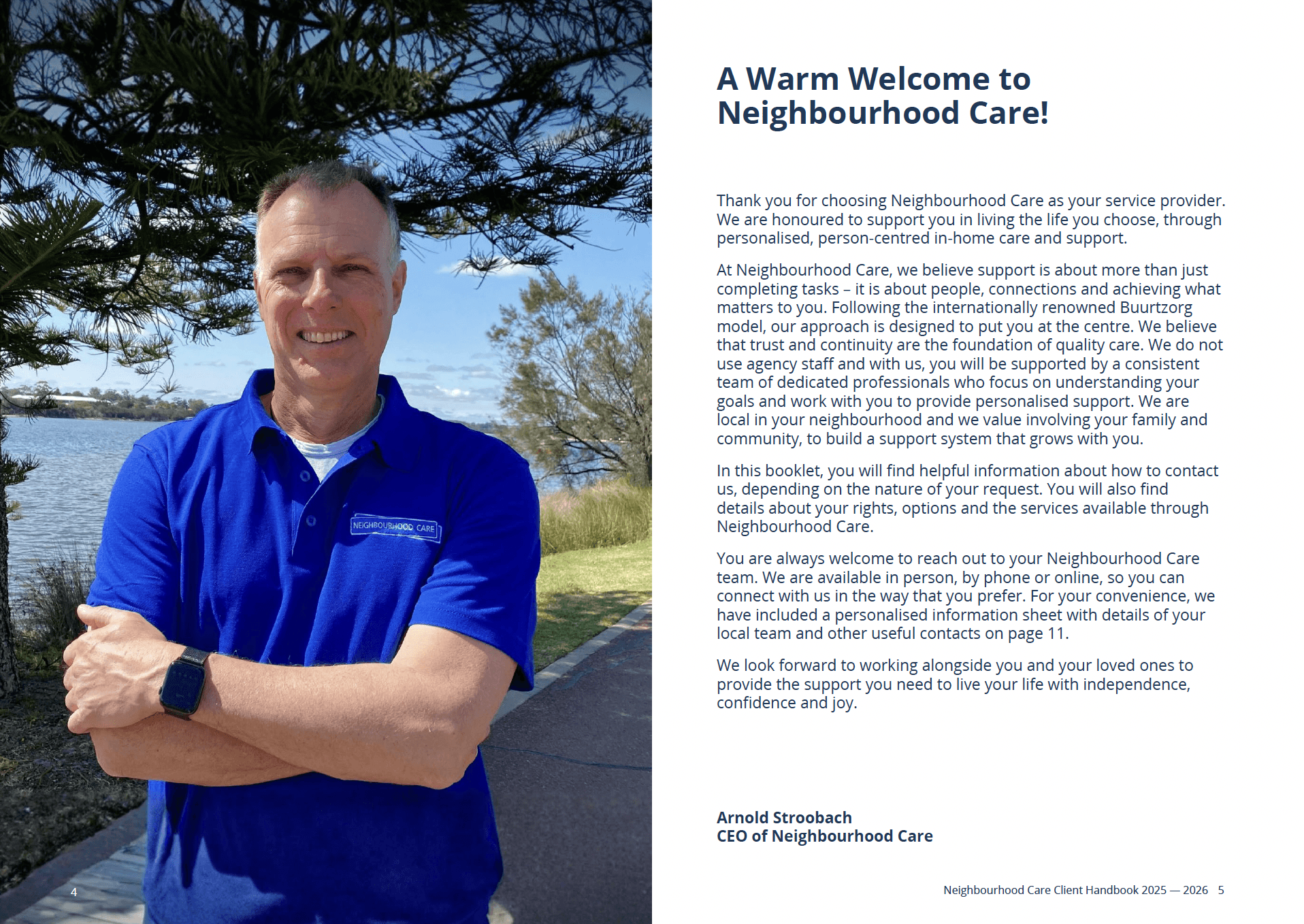
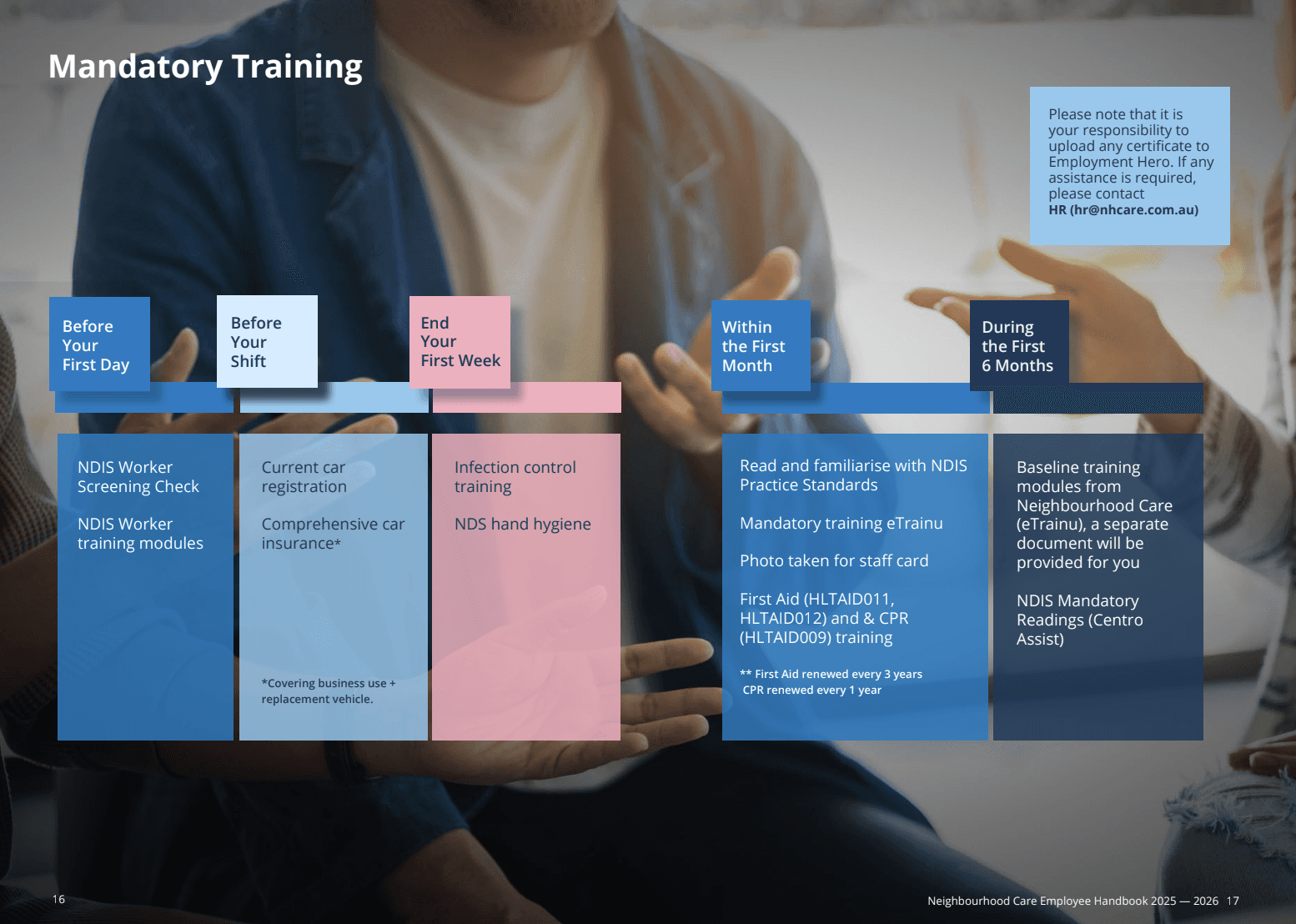
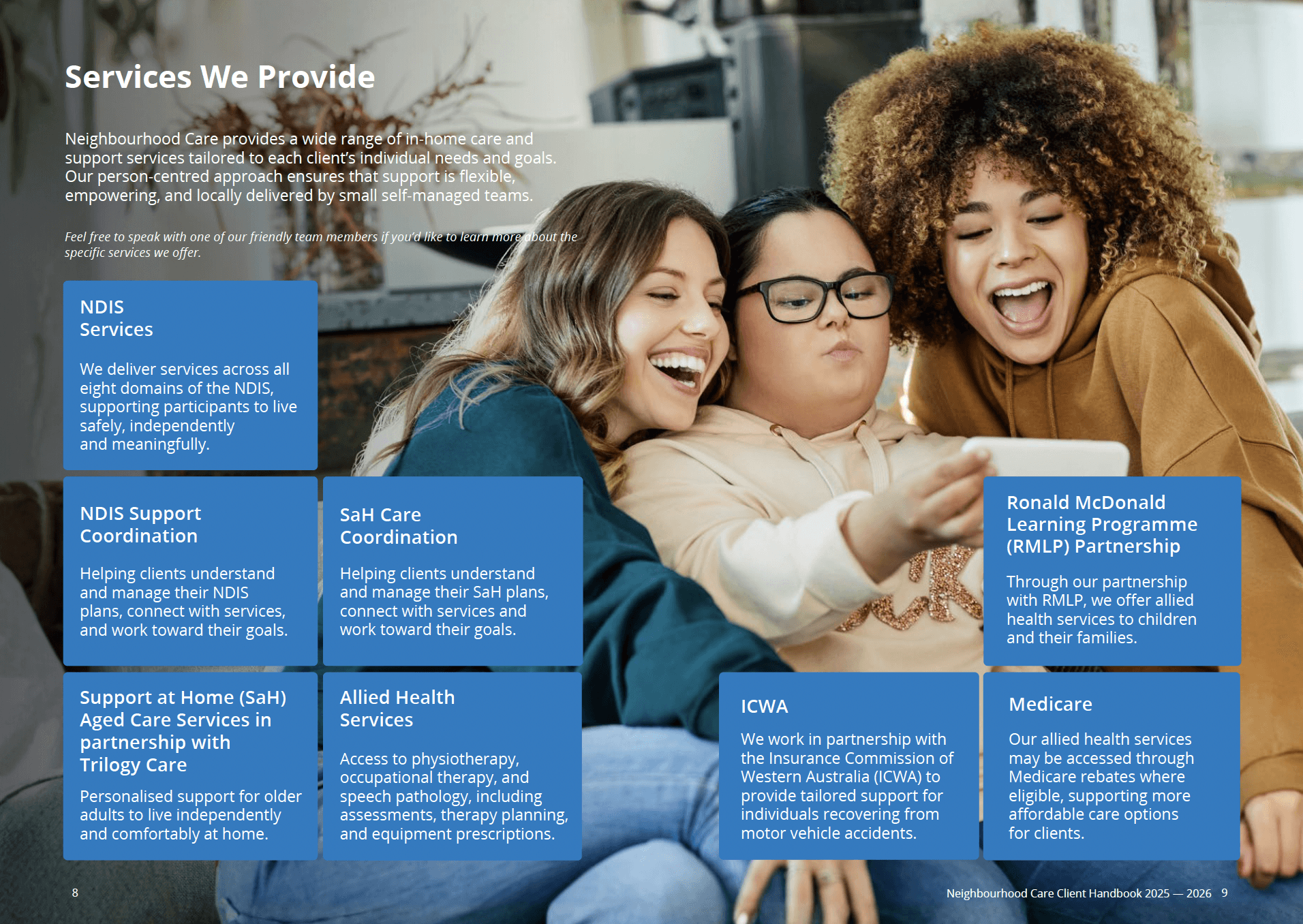
The starting point was a 40-page Word document. Dense paragraphs, minimal structure, no visual breathing room. My first task wasn't design, it was editing the visual logic. What information was truly essential? What could be simplified? What needed to be seen at a glance versus read in full? From there I built a design system aligned with NH Care's rebrand: the organization's colors, typography, and visual language applied consistently across both documents. Colour blocking became the primary tool for breaking density, using background panels and informational callout boxes to create rhythm and guide the eye through content that could otherwise feel relentless. For the client handbook, every decision was made with the same user in mind as the website: someone older, possibly anxious, navigating an unfamiliar process. Text was kept short and direct. Sections were clearly separated. Nothing assumed prior knowledge. For the employee handbook, the tone shifted slightly, warmer, more welcoming, but the same principle applied: clarity over comprehensiveness. A new employee on day one doesn't need every policy detail. They need to feel oriented. Without staff photography available, I leaned into the brand's color system and geometric shapes to create visual interest, turning what could have been a limitation into a design decision that made both documents feel more like the brand and less like a compliance requirement. The final deliverables were printed, 30 copies of the client handbook distributed in person and sent digitally via HubSpot, and both versions were also made available as digital PDFs.
Es
El punto de partida fue un documento Word de 40 páginas. Párrafos densos, estructura mínima, sin espacio visual para respirar. Mi primera tarea no fue diseñar, fue editar la lógica visual. ¿Qué información era verdaderamente esencial? ¿Qué podía simplificarse? ¿Qué necesitaba verse de un vistazo versus leerse en profundidad? Desde ahí construí un sistema de diseño alineado con el rebranding de NH Care: los colores, tipografía y lenguaje visual de la organización aplicados de forma consistente en ambos documentos. El bloqueo de color se convirtió en la herramienta principal para romper la densidad, usando paneles de fondo y cajas informativas para crear ritmo y guiar el ojo a través de un contenido que de otro modo podía sentirse implacable. Para el handbook de clientes, cada decisión fue tomada con el mismo usuario en mente que el sitio web: alguien mayor, posiblemente ansioso, navegando un proceso desconocido. El texto fue corto y directo. Las secciones claramente separadas. Nada asumía conocimiento previo. Para el handbook de empleados, el tono cambió levemente, más cálido, más acogedor, pero el mismo principio aplicó: claridad sobre exhaustividad. Un empleado nuevo en su primer día no necesita cada detalle de política. Necesita sentirse orientado. Sin fotografía de staff disponible, me apoyé en el sistema de colores de la marca y formas geométricas para crear interés visual, convirtiendo lo que podría haber sido una limitación en una decisión de diseño que hizo que ambos documentos se sintieran más como la marca y menos como un requisito de cumplimiento. Los entregables finales fueron impresos, 30 copias del handbook de clientes distribuidas en persona y enviadas digitalmente vía HubSpot y ambas versiones también disponibles como PDFs digitales.
What I
Learned
En
This project taught me that information design is as much about what you remove as what you add. The most important work happened before I opened InDesign, understanding the reader, mapping what they actually needed, and deciding what the document was really for. A handbook isn't a legal document. It's a first impression. And first impressions deserve the same attention as any other brand touchpoint. I also learned that constraints, no photography, dense existing content, a client who loves text, aren't obstacles. They're the brief within the brief.
Es
Este proyecto me enseñó que el diseño de información tiene que ver tanto con lo que se quita como con lo que se agrega. El trabajo más importante ocurrió antes de abrir InDesign, entender al lector, mapear lo que realmente necesitaba, y decidir para qué era realmente el documento. Un handbook no es un documento legal. Es una primera impresión. Y las primeras impresiones merecen la misma atención que cualquier otro punto de contacto de marca. También aprendí que las restricciones, sin fotografía, contenido existente denso, un cliente que ama el texto, no son obstáculos. Son el brief dentro del brief.
The
Result
En
Two handbooks, one for clients, one for employees, reduced from 40 pages to 15 without losing essential information. Visually aligned with the NH Care rebrand, printed and distributed, and designed to be read by people who never asked to read a handbook.
Es
Dos handbooks, uno para clientes, uno para empleados, reducidos de 40 páginas a 15 sin perder información esencial. Visualmente alineados con el rebranding de NH Care, impresos y distribuidos, y diseñados para ser leídos por personas que nunca pidieron leer un handbook.


HubSpot
Integration
En
With the new branding established, I saw a major opportunity to elevate our communication strategy through EDMs. Previously, emails were designed in Canva and sent manually, which felt fragmented and traditional. By introducing HubSpot to the team, we completely transformed this process. I designed and produced a series of EDMs distributed via HubSpot, including client newsletters, NDIS updates, and event communications. Moving the organisation’s email communications to a brand-aligned HubSpot template system established true visual consistency across all digital touchpoints for the first time. This migration allowed us to build robust databases, automate bulk campaigns, and bring a high level of credibility and professionalism to our fortnightly updates. Below, you can see the shift in quality and how we successfully expanded our reach to more clients. The metrics and graphs clearly demonstrate our growth, allowing us to accurately determine exactly what type of content our clients want to see.
Es
Con la nueva identidad establecida, vi la oportunidad perfecta para elevar nuestra estrategia de comunicación a través de EDMs (correos masivos). Anteriormente, los correos se diseñaban en Canva y se enviaban de forma manual, lo que resultaba un proceso ambiguo y tradicional. Al introducir HubSpot al equipo, transformamos este flujo por completo. Diseñé y produje una serie de EDMs distribuidos vía HubSpot, incluyendo newsletters para clientes, actualizaciones de NDIS y comunicados de eventos. Migrar las comunicaciones de la organización a un sistema de plantillas alineado con la marca en HubSpot permitió establecer, por primera vez, una consistencia visual real en todos los puntos de contacto digitales. Esto nos permitió crear bases de datos sólidas, programar envíos masivos y aportar un alto nivel de confianza y profesionalismo a nuestros mensajes quincenales. A continuación, comparto el cambio visual y cómo logramos llegar a más clientes. Las gráficas lo demuestran claramente: esta optimización nos permitió medir métricas reales e identificar con precisión qué tipo de contenido es el que nuestros clientes realmente quieren recibir.


Neighbourhood CARE
Replacing outdated Word files and scattered Canva emails with a professional, data-driven identity.
(Year)
2025
(Services)
Editorial Design · Information Design · Marketing Emails
(Tools Used)
Adobe InDesign · Adobe Illustrator · Adobe Photoshop · HubSpot
The
Challenge
En
NH Care needed two handbooks, one for clients, one for employees. Both existed already, in the way most internal documents exist: dense Word files, wall-to-wall text, no visual hierarchy, no personality, and no real consideration for the person on the other side. The client handbook would be handed to older adults and their families at a moment when they were likely overwhelmed, navigating care decisions, unfamiliar systems, and a lot of information they needed to retain. The employee handbook would land in the hands of new staff on their first day. In both cases, the document had one job: make people feel informed, not buried. The additional constraint was imagery. The staff didn't want to be photographed. Which meant design had to do what photography couldn't.
Es
NH Care necesitaba dos handbooks, uno para clientes, uno para empleados. Ambos ya existían, de la manera en que la mayoría de los documentos internos existen: archivos de Word densos, texto de pared a pared, sin jerarquía visual, sin personalidad, y sin consideración real por la persona al otro lado. El handbook de clientes sería entregado a adultos mayores y sus familias en un momento en que probablemente estaban abrumados, navegando decisiones de cuidado, sistemas desconocidos, y mucha información que necesitaban retener. El handbook de empleados llegaría a manos del nuevo personal en su primer día. En ambos casos, el documento tenía un solo trabajo: hacer que las personas se sintieran informadas, no enterradas. La restricción adicional era el imagery. El staff no quería ser fotografiado. Lo que significaba que el diseño tenía que hacer lo que la fotografía no podía.
My
roLE
En
Visual design for both handbooks, layout, typography, colour system, information hierarchy, and print production. Content structure was defined collaboratively with the marketing team. The visual execution was entirely mine.
Es
Diseño visual para ambos handbooks, layout, tipografía, sistema de color, jerarquía de información y producción impresa. La estructura de contenido fue definida colaborativamente con el equipo de marketing. La ejecución visual fue completamente mía.
The
Process
En
The starting point was a 40-page Word document. Dense paragraphs, minimal structure, no visual breathing room. My first task wasn't design, it was editing the visual logic. What information was truly essential? What could be simplified? What needed to be seen at a glance versus read in full? From there I built a design system aligned with NH Care's rebrand: the organization's colors, typography, and visual language applied consistently across both documents. Colour blocking became the primary tool for breaking density, using background panels and informational callout boxes to create rhythm and guide the eye through content that could otherwise feel relentless. For the client handbook, every decision was made with the same user in mind as the website: someone older, possibly anxious, navigating an unfamiliar process. Text was kept short and direct. Sections were clearly separated. Nothing assumed prior knowledge. For the employee handbook, the tone shifted slightly, warmer, more welcoming, but the same principle applied: clarity over comprehensiveness. A new employee on day one doesn't need every policy detail. They need to feel oriented. Without staff photography available, I leaned into the brand's color system and geometric shapes to create visual interest, turning what could have been a limitation into a design decision that made both documents feel more like the brand and less like a compliance requirement. The final deliverables were printed, 30 copies of the client handbook distributed in person and sent digitally via HubSpot, and both versions were also made available as digital PDFs.
Es
El punto de partida fue un documento Word de 40 páginas. Párrafos densos, estructura mínima, sin espacio visual para respirar. Mi primera tarea no fue diseñar, fue editar la lógica visual. ¿Qué información era verdaderamente esencial? ¿Qué podía simplificarse? ¿Qué necesitaba verse de un vistazo versus leerse en profundidad? Desde ahí construí un sistema de diseño alineado con el rebranding de NH Care: los colores, tipografía y lenguaje visual de la organización aplicados de forma consistente en ambos documentos. El bloqueo de color se convirtió en la herramienta principal para romper la densidad, usando paneles de fondo y cajas informativas para crear ritmo y guiar el ojo a través de un contenido que de otro modo podía sentirse implacable. Para el handbook de clientes, cada decisión fue tomada con el mismo usuario en mente que el sitio web: alguien mayor, posiblemente ansioso, navegando un proceso desconocido. El texto fue corto y directo. Las secciones claramente separadas. Nada asumía conocimiento previo. Para el handbook de empleados, el tono cambió levemente, más cálido, más acogedor, pero el mismo principio aplicó: claridad sobre exhaustividad. Un empleado nuevo en su primer día no necesita cada detalle de política. Necesita sentirse orientado. Sin fotografía de staff disponible, me apoyé en el sistema de colores de la marca y formas geométricas para crear interés visual, convirtiendo lo que podría haber sido una limitación en una decisión de diseño que hizo que ambos documentos se sintieran más como la marca y menos como un requisito de cumplimiento. Los entregables finales fueron impresos, 30 copias del handbook de clientes distribuidas en persona y enviadas digitalmente vía HubSpot y ambas versiones también disponibles como PDFs digitales.
What I
Learned
En
This project taught me that information design is as much about what you remove as what you add. The most important work happened before I opened InDesign, understanding the reader, mapping what they actually needed, and deciding what the document was really for. A handbook isn't a legal document. It's a first impression. And first impressions deserve the same attention as any other brand touchpoint. I also learned that constraints, no photography, dense existing content, a client who loves text, aren't obstacles. They're the brief within the brief.
Es
Este proyecto me enseñó que el diseño de información tiene que ver tanto con lo que se quita como con lo que se agrega. El trabajo más importante ocurrió antes de abrir InDesign, entender al lector, mapear lo que realmente necesitaba, y decidir para qué era realmente el documento. Un handbook no es un documento legal. Es una primera impresión. Y las primeras impresiones merecen la misma atención que cualquier otro punto de contacto de marca. También aprendí que las restricciones, sin fotografía, contenido existente denso, un cliente que ama el texto, no son obstáculos. Son el brief dentro del brief.
The
Result
En
Two handbooks, one for clients, one for employees, reduced from 40 pages to 15 without losing essential information. Visually aligned with the NH Care rebrand, printed and distributed, and designed to be read by people who never asked to read a handbook.
Es
Dos handbooks, uno para clientes, uno para empleados, reducidos de 40 páginas a 15 sin perder información esencial. Visualmente alineados con el rebranding de NH Care, impresos y distribuidos, y diseñados para ser leídos por personas que nunca pidieron leer un handbook.
HubSpot
Integration
En
With the new branding established, I saw a major opportunity to elevate our communication strategy through EDMs. Previously, emails were designed in Canva and sent manually, which felt fragmented and traditional. By introducing HubSpot to the team, we completely transformed this process. I designed and produced a series of EDMs distributed via HubSpot, including client newsletters, NDIS updates, and event communications. Moving the organisation’s email communications to a brand-aligned HubSpot template system established true visual consistency across all digital touchpoints for the first time. This migration allowed us to build robust databases, automate bulk campaigns, and bring a high level of credibility and professionalism to our fortnightly updates. Below, you can see the shift in quality and how we successfully expanded our reach to more clients. The metrics and graphs clearly demonstrate our growth, allowing us to accurately determine exactly what type of content our clients want to see.
Es
Con la nueva identidad establecida, vi la oportunidad perfecta para elevar nuestra estrategia de comunicación a través de EDMs (correos masivos). Anteriormente, los correos se diseñaban en Canva y se enviaban de forma manual, lo que resultaba un proceso ambiguo y tradicional. Al introducir HubSpot al equipo, transformamos este flujo por completo. Diseñé y produje una serie de EDMs distribuidos vía HubSpot, incluyendo newsletters para clientes, actualizaciones de NDIS y comunicados de eventos. Migrar las comunicaciones de la organización a un sistema de plantillas alineado con la marca en HubSpot permitió establecer, por primera vez, una consistencia visual real en todos los puntos de contacto digitales. Esto nos permitió crear bases de datos sólidas, programar envíos masivos y aportar un alto nivel de confianza y profesionalismo a nuestros mensajes quincenales. A continuación, comparto el cambio visual y cómo logramos llegar a más clientes. Las gráficas lo demuestran claramente: esta optimización nos permitió medir métricas reales e identificar con precisión qué tipo de contenido es el que nuestros clientes realmente quieren recibir.
Neighbourhood CARE
40 pages of Word. 15 pages people actually read.
(Year)
2025
(Services)
Editorial Design · Information Design · Marketing Emails
(Tools Used)
Adobe InDesign · Adobe Illustrator · Adobe Photoshop · HubSpot
The
Challenge
En
NH Care needed two handbooks, one for clients, one for employees. Both existed already, in the way most internal documents exist: dense Word files, wall-to-wall text, no visual hierarchy, no personality, and no real consideration for the person on the other side. The client handbook would be handed to older adults and their families at a moment when they were likely overwhelmed, navigating care decisions, unfamiliar systems, and a lot of information they needed to retain. The employee handbook would land in the hands of new staff on their first day. In both cases, the document had one job: make people feel informed, not buried. The additional constraint was imagery. The staff didn't want to be photographed. Which meant design had to do what photography couldn't.
Es
NH Care necesitaba dos handbooks, uno para clientes, uno para empleados. Ambos ya existían, de la manera en que la mayoría de los documentos internos existen: archivos de Word densos, texto de pared a pared, sin jerarquía visual, sin personalidad, y sin consideración real por la persona al otro lado. El handbook de clientes sería entregado a adultos mayores y sus familias en un momento en que probablemente estaban abrumados, navegando decisiones de cuidado, sistemas desconocidos, y mucha información que necesitaban retener. El handbook de empleados llegaría a manos del nuevo personal en su primer día. En ambos casos, el documento tenía un solo trabajo: hacer que las personas se sintieran informadas, no enterradas. La restricción adicional era el imagery. El staff no quería ser fotografiado. Lo que significaba que el diseño tenía que hacer lo que la fotografía no podía.
My
roLE
En
Visual design for both handbooks, layout, typography, colour system, information hierarchy, and print production. Content structure was defined collaboratively with the marketing team. The visual execution was entirely mine.
Es
Diseño visual para ambos handbooks, layout, tipografía, sistema de color, jerarquía de información y producción impresa. La estructura de contenido fue definida colaborativamente con el equipo de marketing. La ejecución visual fue completamente mía.
The
Process
En
The starting point was a 40-page Word document. Dense paragraphs, minimal structure, no visual breathing room. My first task wasn't design, it was editing the visual logic. What information was truly essential? What could be simplified? What needed to be seen at a glance versus read in full? From there I built a design system aligned with NH Care's rebrand: the organization's colors, typography, and visual language applied consistently across both documents. Colour blocking became the primary tool for breaking density, using background panels and informational callout boxes to create rhythm and guide the eye through content that could otherwise feel relentless. For the client handbook, every decision was made with the same user in mind as the website: someone older, possibly anxious, navigating an unfamiliar process. Text was kept short and direct. Sections were clearly separated. Nothing assumed prior knowledge. For the employee handbook, the tone shifted slightly, warmer, more welcoming, but the same principle applied: clarity over comprehensiveness. A new employee on day one doesn't need every policy detail. They need to feel oriented. Without staff photography available, I leaned into the brand's color system and geometric shapes to create visual interest, turning what could have been a limitation into a design decision that made both documents feel more like the brand and less like a compliance requirement. The final deliverables were printed, 30 copies of the client handbook distributed in person and sent digitally via HubSpot, and both versions were also made available as digital PDFs.
Es
El punto de partida fue un documento Word de 40 páginas. Párrafos densos, estructura mínima, sin espacio visual para respirar. Mi primera tarea no fue diseñar, fue editar la lógica visual. ¿Qué información era verdaderamente esencial? ¿Qué podía simplificarse? ¿Qué necesitaba verse de un vistazo versus leerse en profundidad? Desde ahí construí un sistema de diseño alineado con el rebranding de NH Care: los colores, tipografía y lenguaje visual de la organización aplicados de forma consistente en ambos documentos. El bloqueo de color se convirtió en la herramienta principal para romper la densidad, usando paneles de fondo y cajas informativas para crear ritmo y guiar el ojo a través de un contenido que de otro modo podía sentirse implacable. Para el handbook de clientes, cada decisión fue tomada con el mismo usuario en mente que el sitio web: alguien mayor, posiblemente ansioso, navegando un proceso desconocido. El texto fue corto y directo. Las secciones claramente separadas. Nada asumía conocimiento previo. Para el handbook de empleados, el tono cambió levemente, más cálido, más acogedor, pero el mismo principio aplicó: claridad sobre exhaustividad. Un empleado nuevo en su primer día no necesita cada detalle de política. Necesita sentirse orientado. Sin fotografía de staff disponible, me apoyé en el sistema de colores de la marca y formas geométricas para crear interés visual, convirtiendo lo que podría haber sido una limitación en una decisión de diseño que hizo que ambos documentos se sintieran más como la marca y menos como un requisito de cumplimiento. Los entregables finales fueron impresos, 30 copias del handbook de clientes distribuidas en persona y enviadas digitalmente vía HubSpot y ambas versiones también disponibles como PDFs digitales.
What I
Learned
En
This project taught me that information design is as much about what you remove as what you add. The most important work happened before I opened InDesign, understanding the reader, mapping what they actually needed, and deciding what the document was really for. A handbook isn't a legal document. It's a first impression. And first impressions deserve the same attention as any other brand touchpoint. I also learned that constraints, no photography, dense existing content, a client who loves text, aren't obstacles. They're the brief within the brief.
Es
Este proyecto me enseñó que el diseño de información tiene que ver tanto con lo que se quita como con lo que se agrega. El trabajo más importante ocurrió antes de abrir InDesign, entender al lector, mapear lo que realmente necesitaba, y decidir para qué era realmente el documento. Un handbook no es un documento legal. Es una primera impresión. Y las primeras impresiones merecen la misma atención que cualquier otro punto de contacto de marca. También aprendí que las restricciones, sin fotografía, contenido existente denso, un cliente que ama el texto, no son obstáculos. Son el brief dentro del brief.
The
Result
En
Two handbooks, one for clients, one for employees, reduced from 40 pages to 15 without losing essential information. Visually aligned with the NH Care rebrand, printed and distributed, and designed to be read by people who never asked to read a handbook.
Es
Dos handbooks, uno para clientes, uno para empleados, reducidos de 40 páginas a 15 sin perder información esencial. Visualmente alineados con el rebranding de NH Care, impresos y distribuidos, y diseñados para ser leídos por personas que nunca pidieron leer un handbook.
HubSpot
Integration
En
With the new branding established, I saw a major opportunity to elevate our communication strategy through EDMs. Previously, emails were designed in Canva and sent manually, which felt fragmented and traditional. By introducing HubSpot to the team, we completely transformed this process. I designed and produced a series of EDMs distributed via HubSpot, including client newsletters, NDIS updates, and event communications. Moving the organisation’s email communications to a brand-aligned HubSpot template system established true visual consistency across all digital touchpoints for the first time. This migration allowed us to build robust databases, automate bulk campaigns, and bring a high level of credibility and professionalism to our fortnightly updates. Below, you can see the shift in quality and how we successfully expanded our reach to more clients. The metrics and graphs clearly demonstrate our growth, allowing us to accurately determine exactly what type of content our clients want to see.
Es
Con la nueva identidad establecida, vi la oportunidad perfecta para elevar nuestra estrategia de comunicación a través de EDMs (correos masivos). Anteriormente, los correos se diseñaban en Canva y se enviaban de forma manual, lo que resultaba un proceso ambiguo y tradicional. Al introducir HubSpot al equipo, transformamos este flujo por completo. Diseñé y produje una serie de EDMs distribuidos vía HubSpot, incluyendo newsletters para clientes, actualizaciones de NDIS y comunicados de eventos. Migrar las comunicaciones de la organización a un sistema de plantillas alineado con la marca en HubSpot permitió establecer, por primera vez, una consistencia visual real en todos los puntos de contacto digitales. Esto nos permitió crear bases de datos sólidas, programar envíos masivos y aportar un alto nivel de confianza y profesionalismo a nuestros mensajes quincenales. A continuación, comparto el cambio visual y cómo logramos llegar a más clientes. Las gráficas lo demuestran claramente: esta optimización nos permitió medir métricas reales e identificar con precisión qué tipo de contenido es el que nuestros clientes realmente quieren recibir.